Blue Marble Geotiff Maps
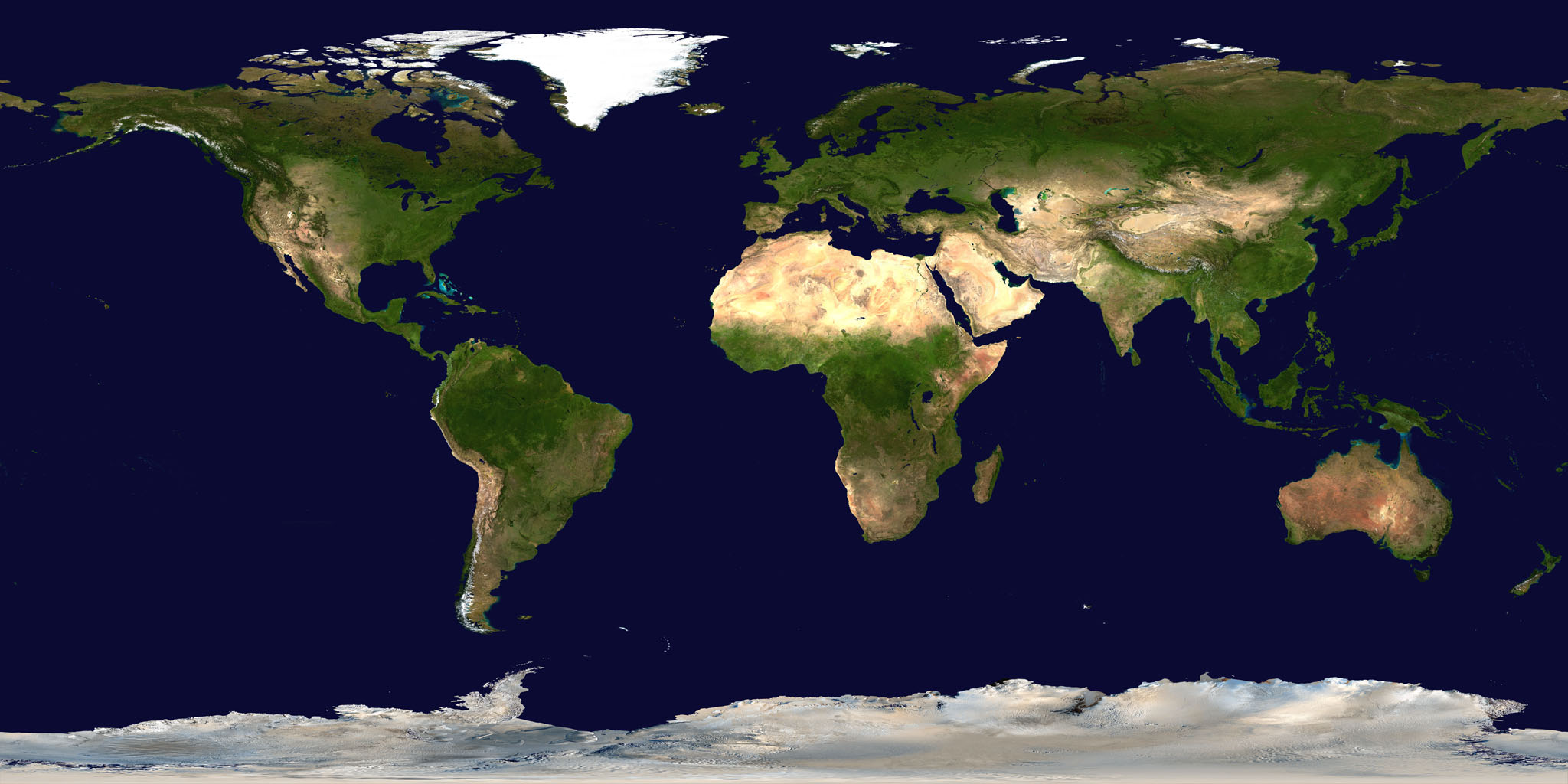
Feb 11, 2002 This spectacular “blue marble” image is the most detailed true-color image of the entire Earth to date. Using a collection of satellite-based observations, scientists and visualizers stitched together months of observations of the land surface, oceans, sea ice, and clouds into a seamless, true-color mosaic of every square kilometer (.386 square mile) of our planet.
- This spectacular “blue marble” image is the most detailed true-color image of the entire Earth to date. Using a collection of satellite-based observations, scientists and visualizers stitched together months of observations of the land surface, oceans, sea ice, and clouds into a seamless, true-color mosaic of every square kilometer (.386 square mile) of our planet.
- Check out the Global Mapper LiDAR Modules' new Pixels-to-Points™ tool in action! Our reseller EngeSat and Fabricio Pondian sent us 192 UAV images to generate this point cloud.
Nasa World Map High Resolution
, =wmsread accesses the Internetto render and retrieve a raster map from a Web Map Service (WMS) server.The ServerURL property of the WMSLayer object, layer,specifies the server. If layer has more than oneelement, then the server overlays each subsequent layer on top ofthe base (first) layer, forming a single image. The server rendersmultiple layers only if all layers share the same ServerURL value.The WMS server returns a raster map, either a color or grayscaleimage, in the output A.
The second output, R,is a raster reference object that ties A to the. The rows of A arealigned with parallels, with even sampling in longitude.
Blue Marble 2
Likewise,the columns of A are aligned with meridians, witheven sampling in latitude.The geographic limits of A span the fulllatitude and longitude extent of layer. The wmsread functionchooses the larger spatial size of A to match itslarger geographic dimension.
The larger spatial size is fixed at thevalue 512. Vickers hydraulic manual. In other words, assuming RGB output, A is 512-by-N-by-3 ifthe latitude extent exceeds longitude extent and N-by-512-by-3 otherwise.In both cases N. Desired time extent of the requested map, specified as a charactervector or numeric date number. The layer must contain data with atime extent, which is indicated by the 'Name' fieldof the Layer.Details.Dimension structure. The 'Name' fieldmust contain the value 'time'.
The 'Extent' fieldof the Layer.Details.Dimension structure determinesthe permissible range of values for the parameter. For more informationabout setting this parameter, see the propertyreference page.Example: A,R= wmsread(layer(1),'Time','June 15, 2015');Data Types: double char.Establish an Internet connection to use wmsread. Periodically, the WMSserver is unavailable.
Retrieving the map can take several minutes.wmsread communicates with the server using aWebMapServer object representing a WMS server. The objectacts as a proxy to a WMS server and resides physically on the client side. Theobject retrieves the map from the server. The object automatically times-outafter 60 seconds if a connection is not made to the server.To specify a proxy server to connect to the Internet,select File Preferences Web and enter your proxy information.Use this feature if you have a firewall.supportsreading data in WMS versions 1.0.0, 1.1.1, and 1.3.0.
For version1.3.0 only, the WMS specification states, 'EPSG:4326 refers to WGS84 geographic latitude, then longitude. That is, in this CRS the x-axiscorresponds to latitude, and the y-axis to longitude.' Most servers provide data in this manner; however, some servers conformto version 1.1.1, where the x-axis correspondsto longitude and the y-axis to latitude.wmsread attempts to validate whether a serveris confirming to the specification. It checks the EPSG:4326 boundingbox, and if the XLim values exceeds the range oflatitude, then the axes are swapped to conform to version 1.1.1 ratherthan 1.3.0. If wmsread does not detect that the XLim valuesexceed the range of latitude and you notice that the latitude andlongitude limits are reversed, then you need to swap them. You caneither modify the bbox parameters in the mapRequestURL ormodify the Latlim and Lonlim parametervalues, if permissible.