Autocad Concrete Hatch
Cach Hatch VL trong AutoCad. Creating custom Hatch with your Own Pattern Design in AutoCAD - Hatch with a Block - Duration: 3:44. AutoCAD: Tutorials, Tips and Tricks 127,709 views.
Hatch Patterns and the Hatch Pattern Editor Custom Hatch PatternsHatch patterns can be used to fill enclosed markups (for example, rectangles, ellipses and polygons) and measurements (like area and volume). Revu comes preloaded with several default hatch patterns and a hatch pattern editor allowing users to create their own patterns. Additionally AutoCAD patterns (.pat files) may be imported into Revu.Hatch patterns are collected in sets for easy organization.
After a new hatch pattern is created, it will appear in the Hatch lists in both the and the. Hatch pattern sets hold related hatch patterns in order to make them easier to find when choosing a hatch pattern for a markup.
Hatch pattern sets can be, much like or, and shared on a network drive or by another Revu user.Hatch patterns are managed with the Manage Hatch Pattern Sets dialog box. This procedure creates a blank PDF and a rectangle markup in order to access it, but it's just one of many ways to get to it, including from the of an existing markup, or from the.To create a new hatch pattern set:. Create. Create a anywhere on the PDF. Right-click the rectangle markup and select Properties.
The appears.On the Properties tab, select Manage from the Hatchmenu.The Manage Hatch Pattern Sets dialog box appears.Click Add. The Add Hatch Pattern Set dialog box appears.
Select New. Enter a name for the hatch pattern set in the Title field. As you enter the name, the hatch pattern's file name is automatically populated in the Location field. To change the default save location of this hatch pattern set, click and select the desired local or network folder. To save the location of this hatch pattern set relative to your current, select Relative Path. To save the full path instead, uncheck this box. For more information about choosing between Relative or Full Paths, see.Click OK.
The Hatch Pattern Editor appears. At this point, you can add hatch patterns to the hatch pattern set, if desired. See below (skip to ). Otherwise, click OK. Discard the PDF created for this procedure. Hatch patterns can be used to fill enclosed markups and measurements.
Revu comes preloaded with several default hatch patterns, but if desired you can create a variety of custom patterns to suit nearly any need.Hatch patterns are managed with the Manage Hatch Pattern Sets dialog box. This procedure creates a blank PDF and a rectangle markup in order to access it, but it's just one of many ways to get to it, including from the of an existing markup, or from the.To create a new hatch pattern in an existing set:. Create. Create a anywhere on the PDF.
Right-click the rectangle markup and select Properties. The appears.On the Properties tab, select Manage from the Hatchmenu.The Manage Hatch Pattern Sets dialog box appears.Select the desired hatch pattern set and click Modify.
The Hatch Pattern Editor appears.Click. The Add Hatch Pattern dialog box appears.
How To Hatch In Autocad 2016
Enter a name for this hatch pattern in the Name field and click OK. The Hatch Pattern Editor reappears with the new hatch pattern listed. Select the new hatch pattern and edit it using the New Pattern controls, as desired. The grid in the lower-right corner represents one hatch tile in which you can draw the desired pattern using lines and/or dots. As you draw your hatch pattern, the lower-left field will preview it for you.
Existing custom hatch patterns can be modified to meet current needs. Changing a hatch pattern has no effect on markups that have already been created using it.Hatch patterns are managed with the Manage Hatch Pattern Sets dialog box. This procedure creates a blank PDF and a rectangle markup in order to access it, but it's just one of many ways to get to it, including from the of an existing markup, or from the.To modify an existing hatch pattern:.
Create. Create a anywhere on the PDF.
Right-click the rectangle markup and select Properties. The appears.On the Properties tab, select Manage from the Hatchmenu.The Manage Hatch Pattern Sets dialog box appears.Select the hatch pattern set that contains the desired hatch pattern and click Modify. The Hatch Pattern Editor appears.
Select the desired hatch pattern and make the desired adjustments. See for more information about what each control does. Click OK to dismiss each of the dialog boxes.

Discard the PDF created for this procedure. Hatch pattern sets can be imported and exported, much like.
Imported hatch pattern sets are copies of existing hatch pattern sets intended for the use of the local user only. If the local user makes any changes to the hatch pattern set, nobody else is affected by the change.
To access a shared hatch pattern set (one that is used by multiple users across a network), see.Hatch patterns are managed with the Manage Hatch Pattern Sets dialog box. This procedure creates a blank PDF and a rectangle markup in order to access it, but it's just one of many ways to get to it, including from the of an existing markup, or from the.To import or export a hatch pattern set:. Create. Create a anywhere on the PDF. Right-click the rectangle markup and select Properties. The appears.On the Properties tab, select Manage from the Hatchmenu.The Manage Hatch Pattern Sets dialog box appears.To import a hatch pattern set, click Import, then select the desired.bhx file and click Open. The selected hatch pattern set is automatically imported.Note: Double-clicking a.bhx file in Explorer will also automatically import it.
To export a hatch pattern set, select it and click Export, then select a folder into which to save it and click Save. Click OK. Discard the PDF created for this procedure. AutoCAD pattern (.pat) files can be imported into existing hatch pattern sets.
You can import AutoCAD patterns into the default hatch pattern set or use a.Hatch patterns are managed with the Manage Hatch Pattern Sets dialog box. This procedure creates a blank PDF and a rectangle markup in order to access it, but it's just one of many ways to get to it, including from the of an existing markup, or from the.To import an AutoCAD pattern into a hatch pattern set:. Create. Create a anywhere on the PDF. Right-click the rectangle markup and select Properties. The appears.On the Properties tab, select Manage from the Hatchmenu.The Manage Hatch Pattern Sets dialog box appears.Select the hatch pattern set into which you wish to import the AutoCAD pattern and click Modify.
The Hatch Pattern Editor appears. Click Import AutoCAD Pattern. The Open dialog box appears. Select the desired AutoCAD pattern (.pat) file and click Open. The pattern is imported. Click OK to dismiss each of the dialog boxes.
Discard the PDF created for this procedure. Shared hatch pattern sets are used my multiple Revu users collaboratively. The hatch pattern set remains in its original location and can be accessed by several users at once. If the hatch pattern set is changed (for example, if or ), each user is affected by those changes. Users attempting to modify shared hatch pattern sets are subject to normal folder permissions on the shared file.Hatch patterns are managed with the Manage Hatch Pattern Sets dialog box.
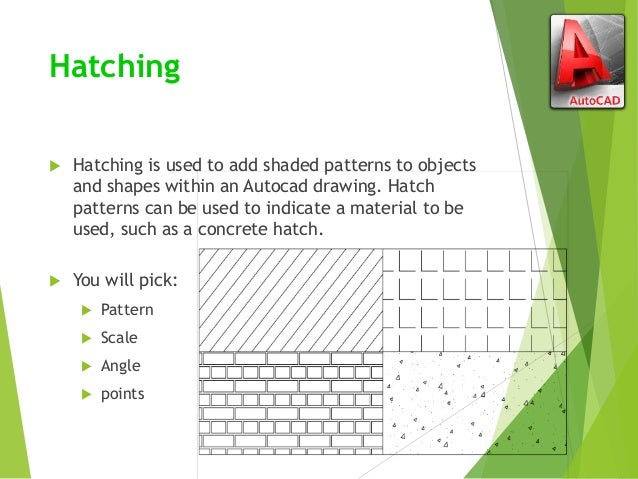
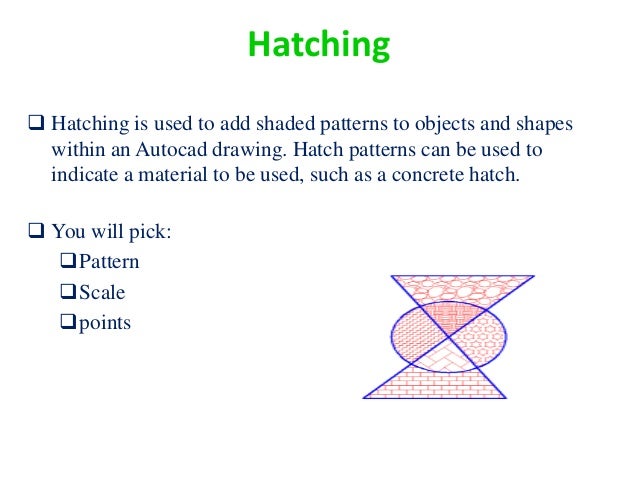
This procedure creates a blank PDF and a rectangle markup in order to access it, but it's just one of many ways to get to it, including from the of an existing markup, or from the.To add a shared hatch pattern set:. Create. Create a anywhere on the PDF. Right-click the rectangle markup and select Properties.
The appears.On the Properties tab, select Manage from the Hatchmenu.The Manage Hatch Pattern Sets dialog box appears.Click Add. The Add Hatch Pattern Set dialog box appears.
Autocad Concrete Hatch Broken
Select Existing. If you know the path to the shared hatch pattern set, enter it in the Location field. Otherwise, click to navigate to it. To save the location of the shared hatch pattern set relative to your current, select Relative Path.
Audi radio code generator. To save the full path instead, uncheck this box. For more information about choosing between Relative or Full Paths, see.
Click OK to dismiss each of the dialog boxes. Discard the PDF created for this procedure.Related topics.
I hope that you noticed something in my previous blog post about that didn’t have anything to do with that topic. In fact, this is a very common issue that plagues AutoCAD Civil 3D users. As you can tell by the title of the post, it is the fact that AutoCAD and the OOTB (Out Of The Box) concrete hatch pattern seem to not get along very well.Sidenote: I think that the problem still persists on other custom concrete patterns as well.As seen below, The issue seems to be only one triangle that is repeated.Here is a good rule of thumb when it comes to AutoCAD. The further away your drawing elements are from the “Origin” (0,0,0) the more weird stuff tends to happen in your drawing. And since Civil 3D works in real-world coordinates, our drawings are far away from the origin. I live in the Denver Colorado area, so my drawings are not only far from zero, zero but also the 3rd zero as we are a mile highLuckily, there is an easy solution to this.
You can give hatches a new origin while leaving your UCS alone.Simply select the hatch so that the “Hatch Editor” contextual tab is shown, Then click on “Set Origin” as shown below and then click on a point that is within the area where your drawing objects are located. I would suggest using a common point as the new origin. Something like the corner of a building.
Autocad Concrete Hatch Pattern
That way if you have two areas that are hatched separately but are right next to each other, they will have the same pattern.Enjoy!